
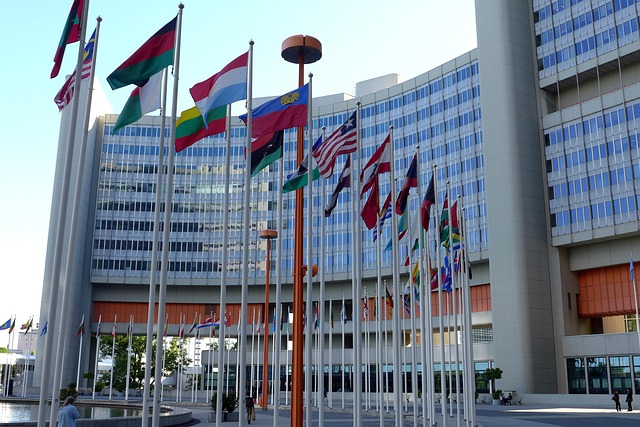
Understanding International Commercial Arbitration Procedures
Introduction
In an increasingly globalized economy, disputes involving cross-border commercial transactions have become certain. Traditional litigation in national courts frequently enough proves inadequate for resolving these disputes efficiently due too issues such as jurisdictional conflicts, enforcement difficulties, and procedural delays. Consequently, international commercial arbitration procedures have emerged as a vital mechanism enabling parties to resolve disputes privately, swiftly, and with a greater degree of procedural autonomy. As of 2025, the landscape of international arbitration continues to evolve, influenced by shifting geopolitical realities, technological advances, and changes in legal frameworks. Practitioners and scholars alike must therefore maintain a nuanced understanding of arbitration procedures to effectively navigate this complex field.
International commercial arbitration is not only a private contractual undertaking but also a deeply regulated legal process shaped by multilayered sources of law, both national and international.The objective of this article is to provide a thorough and critical examination of the procedural dimensions of international commercial arbitration, highlighting its legal underpinnings, operational mechanics, and broader policy implications. The article integrates a wealth of primary authority with scholarly commentary to elucidate the interplay between autonomy and regulation that defines arbitration procedures today. For foundational principles of arbitration law,one may refer to the Pace Law School’s Arbitration Bibliography, which summarizes seminal sources and commentary.
Historical and Statutory Background
International commercial arbitration traces its roots to merchant customs developed during the medieval period, known as the lex mercatoria. These merchant rules provided an early framework for resolving commercial disputes through private adjudication outside state courts. However,formal statutory recognition and regulation of arbitration began to crystallize only in the 19th and 20th centuries,leading to the modern institutional and treaty framework that governs international arbitration today.
One of the earliest codifications was the 1927 Geneva Protocol on Arbitration Clauses, which aimed to enforce arbitration agreements internationally but lacked global acceptance. A watershed moment came with the adoption of the 1958 New York Convention on the Recognition and enforcement of Foreign Arbitral Awards, which remains the cornerstone of international arbitration enforcement. This treaty obliges contracting states to recognize and enforce arbitration agreements and awards, barring only narrow exceptions such as incapacity or violation of public policy.
Subsequent developments include the United Nations Commission on International Trade Law (UNCITRAL) Arbitration Rules promulgated in 1976 and revised in 2010 to provide procedural regulations for ad hoc arbitrations lacking institutional oversight.
| Instrument | Year | Key Provision | Practical Effect |
|---|---|---|---|
| Geneva Protocol on Arbitration Clauses | 1927 | Recognition and enforcement of arbitration agreements | Pioneer treaty with limited adoption, laid groundwork for later conventions |
| New York Convention | 1958 | Enforcement of foreign arbitral awards and arbitration agreements | Universal acceptance; enabled global enforcement |
| UNCITRAL Arbitration Rules | 1976 (revised 2010) | Procedural rules for ad hoc arbitration | Standardized ad hoc arbitration process |
| Model Law on International Commercial Arbitration | 1985 (revised 2006) | Framework for domestic arbitration laws aligned with international standards | Harmonization of arbitration laws in multiple jurisdictions |
Moreover, the adoption of the UNCITRAL Model Law on International Commercial Arbitration has encouraged states to embed uniform arbitration standards into domestic legislation, thereby reducing fragmentation and uncertainty. Legislative intent behind these instruments consistently reflects a policy to promote arbitration as an efficient, flexible alternative dispute resolution mechanism fostering international trade and investment.
Core Legal Elements and Threshold tests
1. Existence and Validity of Arbitration Agreement
The foundation of any arbitration procedure lies in the parties’ valid consent to arbitrate, typically expressed by an arbitration agreement. The threshold test here concerns whether such an agreement exists and is enforceable. The New York Convention mandates courts to refer parties to arbitration upon finding a valid arbitration agreement, barring exceptional circumstances.
Judicial approaches to arbitration agreements have increasingly adopted a liberal construction, upholding arbitration clauses unless manifest invalidity or procedural impropriety is demonstrated. In Fiona Trust & Holding Corporation v Privalov [2007] UKHL 40, the House of Lords underscored that arbitration clauses are to be interpreted broadly to effectuate the parties’ intention to arbitrate, reinforcing the doctrine of competence-competence, which empowers arbitrators to rule on their own jurisdiction.
Different jurisdictions, however, may vary in their willingness to enforce certain categories of arbitration agreements, especially those involving consumer or labor contracts where public policy considerations arise, exemplifying a tension between party autonomy and protective state policies (OECD Report 2016).
2. Jurisdiction and competence-Competence Principle
The principle of competence-competence is central in international commercial arbitration, empowering arbitrators to decide not only the merits of disputes but also challenges to their jurisdiction without preliminary court intervention. This procedural doctrine advances efficient dispute resolution by avoiding premature jurisdictional disputes in courts.
Judicial recognition of competence-competence varies. As an example, the English courts have consistently upheld this principle, as demonstrated in Sulamérica CIA Nacional de Seguros SA v Enesa engenharia SA [2012] EWCA civ 638 (BAILII). In contrast, some civil law jurisdictions maintain more court control over jurisdictional issues.
Furthermore, arbitrators’ jurisdiction is contingent on a valid arbitration agreement, with distinct tests for scope and competence, often informed by the UNCITRAL Model Law, articles 16-17.Parties’ submissions and underlying contract stipulations are scrutinized to delineate arbitrable issues from those reserved to courts.
3. Arbitrability of Disputes
Not all disputes are arbitrable. Determining arbitrability involves assessing whether a particular category of disputes may be resolved arbitrarily under applicable laws. Common exclusions pertain to criminal, family, insolvency, or certain antitrust matters.As an example, the French Cour de cassation on multiple occasions has held that certain public law or consumer protection disputes fall outside the scope of arbitration (Lexology, Arbitrability in French Law).
Conversely, arbitral tribunals are frequently enough empowered to decide questions of arbitrability themselves unless national law explicitly precludes arbitration. the 2010 UNCITRAL Arbitration Rules, Article 23(1) expressly endorse this view, demonstrating a commitment to limit court intervention.
4. Procedural Autonomy and institutional Rules
One of the defining features of international commercial arbitration is the parties’ procedural autonomy-freedom to design the process, choose governing laws, select arbitrators, timelines, and evidentiary rules. This autonomy is,however,bounded by mandatory rules of lex arbitri (the law of the seat) and the arbitration agreement itself. When parties fail to specify, institutional rules such as those promulgated by the International Chamber of Commerce (ICC) or the London Court of International Arbitration (LCIA) generally apply by default.
Institutional rules provide procedural frameworks offering clarity and predictability. However, arbitral procedures may diverge significantly from judicial procedures; for instance, arbitrators possess disciplinary discretion over evidence admissibility and burden of proof, which courts rarely enjoy. The Global Arbitration Review explores how such procedural adaptability benefits efficiency but challenges notions of due process.
5. Appointment and Challenge of Arbitrators
The composition of the arbitral tribunal crucially impacts procedural fairness and legitimacy. Typically, parties appoint arbitrators directly or through institutions; the latter often serve as appointing authorities in case of party deadlock. For example, the ICC Arbitration Rules Article 13 delineate appointment procedures to ensure impartiality and independence.
Challenges to arbitrators are permitted on grounds of bias, lack of independence, or failure to meet qualifications, subject to stringent temporal limitations. Courts are generally deferential to tribunals and institutional decisions, upholding challenges only in clear cases of evident partiality. The case National Iranian Oil Company v Crescent Petroleum Co international Ltd, [2016] EWCA Civ 789, exemplifies nuanced judicial review of arbitrator impartiality (BAILII).

6. Conduct of Arbitration Proceedings
Arbitration proceedings are typically conducted in a confidential and flexible manner,contrasting with often public,formal court processes. Typical stages include the filing of notice of arbitration, constitution of the tribunal, preliminary procedural meetings, exchange of written pleadings, evidentiary hearings, and the issuance of the arbitral award.
Arbitral tribunals enjoy important procedural discretion, including setting time limits and deciding on the form of evidence, which can significantly affect both the efficiency and perceived fairness of proceedings. The GAR report on technology in arbitration (2023) notes that procedural rules are increasingly adapting to incorporate virtual hearings and electronic evidence, heightening efficiency but raising challenges of due process and cross-jurisdictional evidentiary standards.
7. The Arbitral Award: Form and Effect
The culmination of arbitration is the arbitral award, which must be in writing, signed, and contain reasons if required by applicable rules. The award is final and binding on the parties, subject to limited grounds for annulment or refusal of enforcement under the governing law and the New York Convention.
Grounds for setting aside awards frequently enough include lack of jurisdiction, procedural irregularity, or violation of public policy. For instance, the U.S.Federal arbitration Act (9 U.S.C.) provides narrow grounds for vacatur; courts are generally reluctant to second-guess arbitral findings, as reflected in the Supreme Court’s ruling in Hall Street Associates v. Mattel, 552 U.S. 576 (2008) (Justia).
International acceptance of arbitration awards underscores the system’s effectiveness; however,enforcement can be obstructed by domestic court interpretations. The decision in Chromalloy Aeroservices v. Arab Republic of Egypt, 939 F. Supp. 907 (D.D.C.1996), affirmed the limits of sovereign immunity in enforcement, a crucial growth in arbitration jurisdiction (Justia).
Practical Challenges and Emerging Trends
While international commercial arbitration offers remarkable benefits, procedural challenges persist. Issues such as multiplicity of proceedings, inconsistent request of laws, and cost-intensive processes threaten arbitration’s efficiency promise. Increasing calls for procedural innovation, including expedited arbitration and consolidation mechanisms, respond to these challenges.
Concurrently, technology continues to reshape arbitration procedures. The COVID-19 pandemic accelerated virtual hearings and electronic submissions,demanding revisions in procedural standards to safeguard fairness and transparency.The White & Case 2024 Arbitration Survey highlights greater party acceptance of tech-enabled arbitration but also underscores cybersecurity and data privacy concerns.
Furthermore,regulatory scrutiny is intensifying,notably concerning transparency in investor-state arbitration and consistency in awards. Calls for greater harmonization reflect an ongoing balancing act between flexibility and legal certainty.
Conclusion
Understanding international commercial arbitration procedures requires both mastery of intricate legal doctrinal frameworks and appreciation of the practical realities shaping arbitration today. From the foundational importance of a valid arbitration agreement to the finality of the arbitral award, the procedural architecture balances party autonomy with requisite procedural safeguards under diverse legal regimes. Practitioners must navigate evolving statutes, institutional rules, and judicial trends to safeguard their clients’ interests effectively.
As arbitration continues adapting to global commerce’s demands, ongoing scholarly and practical engagement will be essential to refine procedures that promote fairness, efficiency, and predictability, thereby sustaining arbitration as a preferred method of resolving international commercial disputes.