
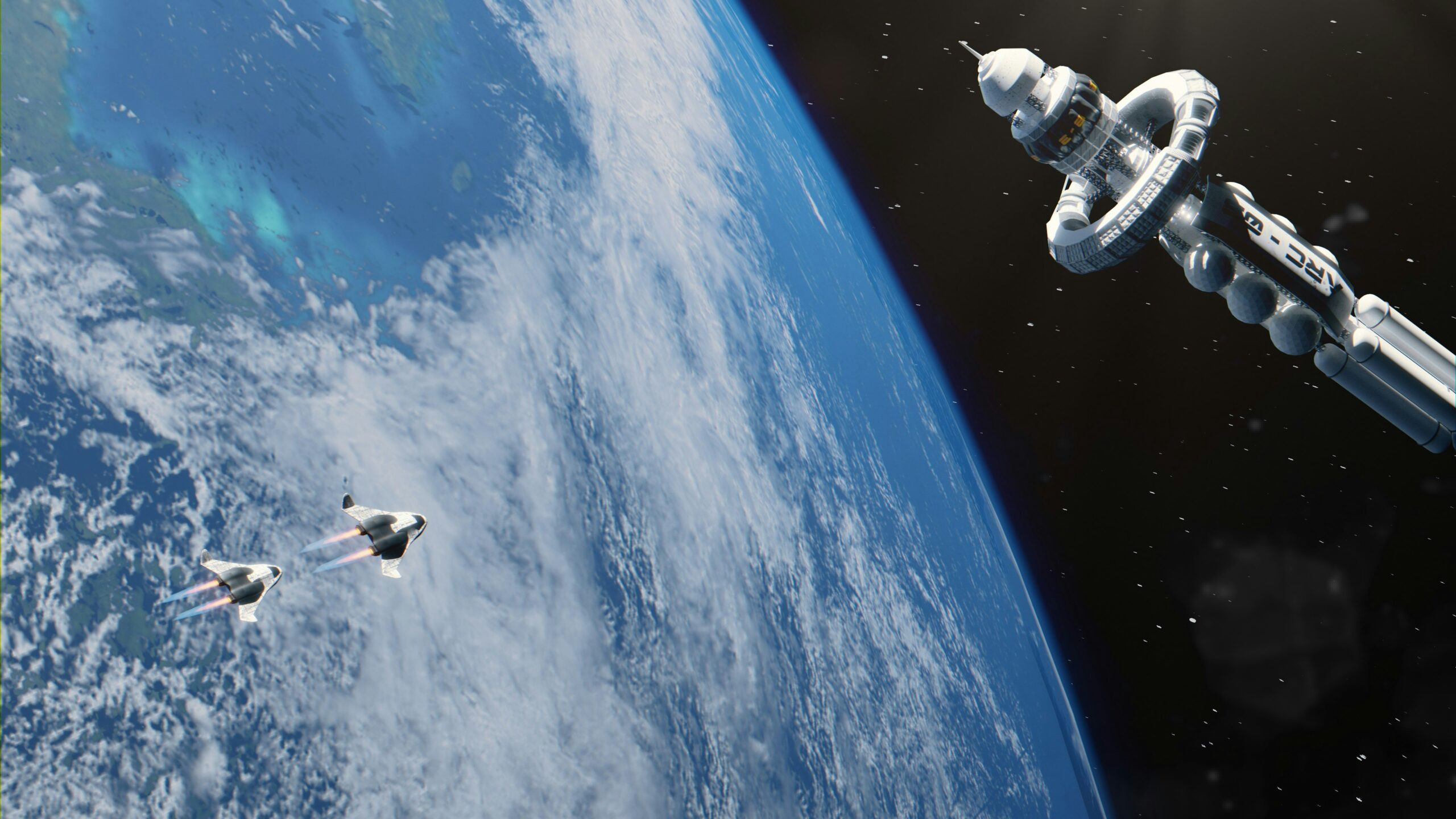
What role does software developers’ liability play in AI spacecraft incidents?
Understanding Legal Liability for AI-Controlled Spacecraft accidents
Introduction
As humanity stands on the cusp of a new era in space exploration and utilization,the integration of advanced artificial intelligence (AI) in spacecraft systems has emerged as a transformative force. AI-controlled spacecraft promise unprecedented autonomy, efficiency, and mission success potential. Though, with this technological leap comes intricate questions about legal liability when accidents occur involving AI-operated vehicles beyond Earth’s atmosphere. Understanding legal liability for AI-controlled spacecraft accidents is not simply a niche concern but a pressing legal challenge with implications spanning international space law, tort principles, and emerging regulatory frameworks.
In the rapidly evolving aerospace landscape of 2025 and beyond, elucidating the allocation of responsibility and fault is imperative to ensure justice, incentivize safe technological progress, and maintain the integrity of space governance. As highlighted by authoritative sources such as Cornell Law School’s primer on space law, the traditional frameworks of liability struggle to accommodate the autonomous decision-making capacities of AI, calling for an updated, nuanced approach.
Past and Statutory Background
The legal treatment of liability for spacecraft mishaps must be understood against the backdrop of the evolution of space law and the gradual incorporation of AI technology. Initially, space activities were governed primarily by the 1967 Outer Space Treaty, which laid the foundational principles for peaceful use and responsibility but left many liability issues ambiguous.
To fill this gap, the 1972 liability Convention established a framework for claims relating to damages caused by space objects, introducing the notion of “absolute liability” for damages on Earth and fault-based liability elsewhere in space. Specifically, it assigned responsibility to the launching state for damages caused by its space object, a principle that forms the core of modern international space liability law.
Yet, thes instruments predate the widespread adoption of AI and autonomous systems in space. As a result,they do not directly address questions such as whether an autonomous AI can bear legal responsibility or how liability should be apportioned when AI controls a spacecraft’s decisions.This lacuna has spurred legislative and policy developments in various jurisdictions attempting to harmonize traditional liability principles with the realities of AI technology.
| Instrument | Year | Key Provision | Practical Effect |
|---|---|---|---|
| Outer Space Treaty | 1967 | States retain jurisdiction and control over objects launched into space; responsible for national activities | Set foundational liability and responsibility principles |
| Liability Convention | 1972 | Absolute liability for damage on Earth caused by space objects; fault-based liability elsewhere | Clarified damage claims procedures |
| EU AI Act (Proposed) | 2021 (Proposal) | Legal frameworks for AI system safety, clarity, and accountability | Potential future standard for AI liability regulation |
More recently, domestic legislatures and regulatory bodies have explored AI-specific laws, such as the European Union’s AI Act proposal, which lays down extensive requirements on AI accountability but stops short of defining clear liabilities in aerospace, underscoring the nascent status of this field. Similarly, the U.S. department of Justice’s AI policies encourage ethical AI deployment within federal agencies but have yet to definitively resolve liability issues for private sector space operators.
Core Legal Elements and Threshold Tests
The issue of legal liability for AI-controlled spacecraft accidents is best dissected by analyzing the core elements that establish fault or responsibility under current law. These broadly include causation, negligence (or fault), product liability, and compliance with applicable regulatory standards.
Causation
Causation in space accident liability, much like terrestrial tort law, requires establishing that the AI-controlled spacecraft’s operations were the proximate cause of the injury or damage sustained. The question here is complicated by AI autonomy; an AI system may independently make decisions which lead to an accident,raising the issue of whether the human operator or developer remains a proximate cause.
Case law, although limited in space-specific AI contexts, offers guiding principles. For example, general product liability cases such as In re Toyota Motor Corp. unintended Acceleration Litigation illustrate courts’ willingness to attribute causation to autonomous system malfunctions. By analogy, if the AI-controlled spacecraft made a decision leading directly to harm, causation might potentially be proved against the operator or manufacturer unless the AI itself is recognized as a distinct legal actor-something international law does not presently allow.
Negligence and Fault
Traditional notions of fault and negligence presuppose a human actor capable of breaching a duty of care. AI autonomy complicates this because the AI “decision-maker” does not possess consciousness or intent. Existing space law, as codified by the Liability convention, bases liability largely on strict concepts applied to states or entities with control over the spacecraft, not AI systems.
Thus, negligence must be analyzed based on the conduct of humans or organizations responsible for the AI systems-designers, programmers, launch operators, or mission controllers. Courts have considered analogous drones and autonomous vehicle cases-for instance, R v. Cambridge analytica Ltd discusses liability for algorithmic decision-making-to attribute negligence to developers or operators whose inaction or insufficient safeguards permitted AI malfunction.
product Liability
Product liability offers an alternative lens, focusing on defective design or manufacture of AI systems integrated into spacecraft. Manufacturers might potentially be held strictly liable if the AI-controlled spacecraft causes harm due to a defect. The EU Product Liability directive and the U.S. Restatement (third) of Torts: Products Liability provide frameworks for such claims.
Nevertheless, AI’s learning capabilities introduce challenges-if an AI system learns from operational data after deployment and makes unpredictable decisions causing damage, courts grapple with whether liability lies with the initial manufacturer or operates akin to a force of nature devoid of human fault. Jurisprudence here remains unsettled but tends to emphasize foreseeability of harm and reasonableness of product testing.
Regulatory Compliance and Risk Allocation
The spacecraft operator’s compliance with authorization and supervision rules-such as national space legislation under the international Civil Aviation Association or the US Federal Aviation Administration (FAA) Office of Commercial Space Transportation-can affect determinations of liability. Regulatory non-compliance may establish presumptions of negligence or even strict liability.
Moreover, contractual risk allocation agreements between commercial operators and AI developers often pre-empt liability discussions by assigning responsibilities and indemnities, visible in private commercial space launch agreements exemplified by SpaceX’s user agreements. Yet, such contracts cannot disclaim statutory liabilities owed to third parties or sovereign entities, thereby ensuring residual legal accountability.

Challenges in Attribution of Liability to AI Systems
One of the foremost legal challenges is the non-personhood of AI systems under current international and domestic law. Unlike corporations-which enjoy legal personhood enabling liability attribution-AI systems remain tools or instruments. This doctrinal reality precludes direct attribution of fault to AI entities, necessitating human-centric liability models.
The European Parliament’s Resolution on Civil Law Rules on Robotics acknowledges these challenges by recommending the creation of a specific legal status for complex autonomous robots but stops short of immediate binding rules for spacefaring AI systems. Similarly, the U.S.legal system recognizes AI as a “product” rather than a legal actor,invoking doctrines of vicarious liability and product liability to grapple with AI decisions.
This framework generates practical problems in complex spacecraft accidents where independent AI decisions are embedded with multiple layers of human programming and operational inputs. The division of fault among manufacturers, AI developers, spacecraft operators, and even states becomes a labyrinthine exercise with profound policy consequences.
International liability Regimes and AI-Controlled Spacecraft
under the auspices of the United Nations Office for Outer Space Affairs (UNOOSA), liability primarily falls on launching states or entities through the Liability Convention. Notably, the Convention holds states absolutely liable for damages caused by their space objects on Earth and sets a fault-based regime for damages in orbit.
The international regime assumes a human operator controlling spacecraft decisions; AI autonomy introduces conceptual difficulties. For example, if an AI malfunctions autonomously and causes orbital debris damage, the state from which it was launched remains liable but may have a robust defense based on due diligence and compliance with safety norms under space registration and due diligence obligations. The margins of AI-induced “fault” remain unexplored in international jurisprudence.
Several scholars advocate for an expanded international framework recognizing AI autonomy, proposing that liability schemes incorporate the risk profiles of AI decisions, much like insurance and fault distribution in aviation. Until such frameworks evolve, states and private operators must rely on traditional liability channels, combining tort principles and statutory regulations under their national jurisdictions.
Domestic Jurisdictional Approaches: Comparative Perspectives
National approaches to AI liability for space incidents blend international treaty obligations with domestic regulatory and tort law. The United States,via the FAA’s Office of Commercial Space Transportation,emphasizes licensing and strict liability for launch-related accidents,while also recognizing the evolving nature of AI control systems in its licensing terms (FAALaunchLicenses). Yet, no explicit AI liability statutes addressing spacecraft exist.
By contrast, the European Union’s layered regulatory vision contemplates a harmonized approach integrating AI accountability (EU Digital Strategy) with stringent aerospace safety directives. The EU’s adoption of the AI act aims to bridge gaps in AI-related legal responsibility, including deployment in aerospace contexts.
China’s rapidly expanding space program is simultaneously advancing AI research and investigating liability implications in domestic law, notably embedding stricter control parameters on autonomous systems within its Civil Code provisions on product and tort liability.
Insurance and Risk management in AI-Controlled Space missions
Insurance forms a critical pillar in managing legal and financial risks associated with AI-operated spacecraft. Traditional space insurance covers launch risks, in-orbit operations, and third-party liability. Though, AI autonomy introduces new underwriting challenges related to unpredictability and emergent failures.
Underwriters and insurers are developing bespoke policies reflecting the risk profiles of AI systems, including clauses on software malfunction, cyber vulnerabilities, and autonomous decision errors. Entities like Boeing Space Insurance incorporate AI governance compliance and redundancy mechanisms as underwriting criteria.
Moreover, insurance contracts often include indemnification provisions and dispute resolution mechanisms designed to clarify liability frontiers where AI unpredictability complicates fault analysis, enhancing legal certainty for stakeholders across the space value chain.
Emerging Legal Theories and Proposals
Recognizing the limitations of current law, several emergent legal theories propose innovative frameworks to assign liability for AI-controlled spacecraft accidents. One such approach advocates for “electronic personhood” for AI systems, a concept explored by the european Parliament in non-binding resolutions. This would allow AI systems limited legal capacities to own assets and accept sanctions.
Another proposal champions strict liability regimes tailored for AI, akin to operator liability in hazardous activities, shifting focus from fault to risk distribution and financial compensation. This approach aims to incentivize parties to adopt robust safety standards and insurers to price AI risks appropriately.
From a policy viewpoint,hybrid models combining human oversight duties with AI system certification and transparency are gaining traction,reinforcing human accountability while recognizing AI’s autonomous operational reality. The OECD AI Principles emphasize responsible AI innovation balancing accountability and innovation facilitation.
Conclusion
The legal landscape governing liability for AI-controlled spacecraft accidents is complex, fragmented, and evolving. While foundational international treaty obligations assign liability primarily to launching states, the emergence of AI autonomy demands reevaluation of traditional principles to address novel causation and fault attribution challenges.
As space activities proliferate and AI systems assume greater control, legal practitioners, policymakers, and technologists must collaboratively refine regulatory frameworks, drawing from interdisciplinary insights to ensure liability law evolves proportionally with technological advancement. Clear, equitable liability rules will not only foster accountability and safety but also encourage responsible innovation critical to humanity’s future in space exploration.
For legal professionals navigating this uncharted terrain, ongoing engagement with international conventions, national regulatory developments, and emerging scholarly discourse remains essential. The intersection of AI technology and space law holds profound challenges-and opportunities-for shaping the future of outer space justice.